Tortoise Care Parameters by Species
The short answer
Five species, five sets of numbers. Adult size runs from 8–10 inches to 24–30 inches; basking temperatures from 90–95°F (32–35°C) to 100°F+ (38°C+); humidity from 30–40% to 70–80%; lifespans from 30–50 years to 70+ years. Russian, Hermann’s, and Greek tortoises hibernate; red-footed and sulcata tortoises do not. Use the row for your species, not the average of the table.
Use this page as the reference for every other tortoise page on this site. If a number on another page differs from this table, this table is the one to follow. Temperatures are given in Fahrenheit and Celsius together, and adult lengths in inches and centimetres together. Humidity values are for adults: juvenile humidity differs (for example, ReptiFiles gives 40–75% for juvenile Russian tortoises and over 80% for juvenile sulcatas), so adult humidity must not be presented as applying to all ages. The housing and UVB rows are new in parameter library v1.1 and are pending review by a veterinary reviewer or breeder; derived values, weakly sourced values, and blank rows are labelled as such and must not be presented as verified standards. Wild basking-spot UVI exposure ranges and indoor basking-gradient targets are two different figures and are never mixed in this table.
Care parameters by species
Read by species
Russian
- Adult length
- 8–10 inches (20–25 cm)
- Basking spot temperature
- 95–100°F (35–38°C)
- Ambient temperature
- 75–85°F (24–29°C)
- Humidity (adult)
- 40–60%
- Lifespan
- 40–50+ years
- Diet
- High-fibre grasses and weeds
- Hibernation
- Hibernates
- Housing — adult minimum footprint (pending review)
- Indoors minimum 24.5–32 sq ft: 7′ long × 3.5′ wide × 2′ high (2.1 m × 1.1 m × 0.6 m, 2.3 m²) to a 4′ × 8′ tortoise table (1.22 m × 2.44 m). Outdoors from 8 × 4 ft.
- Outdoor enclosure (pending review)
- Walls buried at least 12″ (30 cm), wide-mesh top against predators, shade and sun, well-drained soil. Add at least 10 sq ft (1 m²) per extra tortoise.
- UVB (pending veterinary review)
- Needed. Ferguson Zone 3. Wild basking-spot UVI exposure range 2.9–7.4 (not an indoor target). Indoors: Arcadia T5 HO 12% or Zoo Med T5 HO ReptiSun 10.0, with a reflector, tube about 1/3 of enclosure length, in the warm zone near the heat lamp. Distance under the lamp: with mesh 14–16″ (35–40 cm), without mesh 17–20″ (43–50 cm). Indoor basking-gradient target UVI 3.0–4.0 (Solarmeter 6.5). Light 14 hours/day in summer, 10 hours/day in winter. Outdoors, no artificial lighting is needed.
Hermann’s
- Adult length
- 8–11 inches (20–28 cm)
- Basking spot temperature
- 95–100°F (35–38°C)
- Ambient temperature
- 75–85°F (24–29°C)
- Humidity (adult)
- 40–60%
- Lifespan
- 50+ years
- Diet
- High-fibre grasses
- Hibernation
- Hibernates
- Housing — adult minimum footprint (pending review)
- No consensus, wide range — pending review. Indoors from 4′ × 2′ (1.22 m × 0.61 m), with 4′ × 4′ (1.22 m × 1.22 m) more secure (weaker sources). Formula-derived upper reference, from the adult length above, about 7′4″ × 3′8″ (2.24 m × 1.12 m, about 2.5 m²). Outdoors from 8 × 4 ft.
- Outdoor enclosure (pending review)
- No usable source value found — left blank pending further research.
- UVB (pending veterinary review)
- Needed. Ferguson Zone 3 (same group as Russian). Wild basking-spot UVI exposure range 2.9–7.4. Tube percentage, lamp distance, and gradient target have no direct source — left blank pending veterinary review; do not borrow the Russian values.
Red-footed
- Adult length
- 10–14 inches (25–36 cm)
- Basking spot temperature
- 90–95°F (32–35°C)
- Ambient temperature
- 80–85°F (27–29°C)
- Humidity (adult)
- 70–80%
- Lifespan
- 30–50 years
- Diet
- Omnivorous (fruit and vegetables plus a small amount of animal protein)
- Hibernation
- Does not hibernate
- Housing — adult minimum footprint (pending review)
- Indoors at least 6′ × 4′ (1.83 m × 1.22 m), with 4′ × 8′ more secure. Formula values (adult 12–18″) are over 8–12′ long and over 4–6′ wide, 32–72 sq ft (3–6.7 m²). An open tortoise table is not recommended (it cannot hold the high humidity). The 8 × 4 ft size in shopping lists is a seasonal indoor temporary size only and must not be used as an adult minimum.
- Outdoor enclosure (pending review)
- Walls at least 2′ high, buried at least 12″ (30 cm), wide-mesh (chicken wire) top, shade and sun all day, well-drained soil. Add at least 16 sq ft (1.5 m²) per extra tortoise.
- UVB (pending veterinary review)
- Needed. Zone number not verified in an authoritative source — no Zone number is given (a tropical forest-edge species, below the Mediterranean species). Indoors: T5 HO 6% (basking UVI 2–3, one source) or 12%/10.0, with paired distances — 6%: with mesh 11–14″, without mesh 14–17″; 12%: with mesh 17–22″, without mesh 21–25″ — with a reflector, tube about 1/2 of enclosure length. The two statements conflict and are kept as stated, pending review. Light 13 hours/day in summer, 11 hours/day in winter. Outdoors, no artificial lighting is needed.
Greek
- Adult length
- 8–10 inches (20–25 cm)
- Basking spot temperature
- 95–100°F (35–38°C)
- Ambient temperature
- 75–85°F (24–29°C)
- Humidity (adult)
- 40–60%
- Lifespan
- 50+ years
- Diet
- High-fibre grasses
- Hibernation
- Hibernates
- Housing — adult minimum footprint (pending review)
- Weakest sources — pending review. Indoors at least 4′ × 2′ (single source). Formula-derived upper reference about 6′8″ × 3′4″ (2.03 m × 1.02 m, about 2.1 m²). Outdoors from 8 × 4 ft.
- Outdoor enclosure (pending review)
- No usable source value found — left blank pending further research.
- UVB (pending veterinary review)
- Needed. Ferguson Zone 3 (same group as Russian). Wild basking-spot UVI exposure range 2.9–7.4. Tube percentage, lamp distance, and gradient target have no direct source — left blank pending veterinary review; do not borrow the Russian values.
Sulcata
- Adult length
- 24–30 inches (61–76 cm; can exceed 100 lb)
- Basking spot temperature
- 100°F+ (38°C+)
- Ambient temperature
- 80–90°F (27–32°C)
- Humidity (adult)
- 30–40% (dry environment)
- Lifespan
- 70+ years
- Diet
- High-fibre grasses; no high-protein food and no fruit
- Hibernation
- Does not hibernate
- Housing — adult minimum footprint (pending review)
- Not suitable for long-term indoor keeping as an adult. Outdoors: minimum 150 sq ft (13.9 m²), target 300–800 sq ft (27.9–74.3 m²), with a heated night house. The ReptiFiles adult value of 20′ long × 10′ wide × 4′ high (6.1 m × 3 m × 1.2 m, 18.3 m²) falls within this range. Do not cite “300 square feet”: the source page’s own arithmetic is wrong (20 × 10 = 200, contradicting its metric figure of 18.3 m²).
- Outdoor enclosure (pending review)
- No standing water, shade and sun, well-drained soil. Walls must withstand an adult sulcata (concrete block, not wood), buried at least 12″ (30 cm), with a chain-link top against predators.
- UVB (pending veterinary review)
- Needed. Ferguson Zone 4. Gradient UVI 2.6–3.5, basking maximum 4.5–8.0 (wild exposure figures). Indoors: Arcadia T5 HO Desert 12% (with mesh 9–12″/23–31 cm, without mesh 14–16″/36–41 cm), Zoo Med 10.0 (same distances), or Arcadia Dragon 14% (with mesh 10–13″/25–33 cm, without mesh 15–20″/38–51 cm), with a reflector, tube about 1/2 of enclosure length, in the warm zone near the heat lamp. Indoor basking-gradient target UVI 4.0–6.0. Light 13 hours/day in summer, 11 hours/day in winter. Outdoors, daylight comes first and no artificial lighting is needed.
Compare all species in one table
Swipe or scroll across the table to compare values. Use the full source notes with each range.
| Parameter | Russian | Hermann’s | Red-footed | Greek | Sulcata |
|---|---|---|---|---|---|
| Adult length | 8–10 inches (20–25 cm) | 8–11 inches (20–28 cm) | 10–14 inches (25–36 cm) | 8–10 inches (20–25 cm) | 24–30 inches (61–76 cm; can exceed 100 lb) |
| Basking spot temperature | 95–100°F (35–38°C) | 95–100°F (35–38°C) | 90–95°F (32–35°C) | 95–100°F (35–38°C) | 100°F+ (38°C+) |
| Ambient temperature | 75–85°F (24–29°C) | 75–85°F (24–29°C) | 80–85°F (27–29°C) | 75–85°F (24–29°C) | 80–90°F (27–32°C) |
| Humidity (adult) | 40–60% | 40–60% | 70–80% | 40–60% | 30–40% (dry environment) |
| Lifespan | 40–50+ years | 50+ years | 30–50 years | 50+ years | 70+ years |
| Diet | High-fibre grasses and weeds | High-fibre grasses | Omnivorous (fruit and vegetables plus a small amount of animal protein) | High-fibre grasses | High-fibre grasses; no high-protein food and no fruit |
| Hibernation | Hibernates | Hibernates | Does not hibernate | Hibernates | Does not hibernate |
| Housing — adult minimum footprint (pending review) | Indoors minimum 24.5–32 sq ft: 7′ long × 3.5′ wide × 2′ high (2.1 m × 1.1 m × 0.6 m, 2.3 m²) to a 4′ × 8′ tortoise table (1.22 m × 2.44 m). Outdoors from 8 × 4 ft. | No consensus, wide range — pending review. Indoors from 4′ × 2′ (1.22 m × 0.61 m), with 4′ × 4′ (1.22 m × 1.22 m) more secure (weaker sources). Formula-derived upper reference, from the adult length above, about 7′4″ × 3′8″ (2.24 m × 1.12 m, about 2.5 m²). Outdoors from 8 × 4 ft. | Indoors at least 6′ × 4′ (1.83 m × 1.22 m), with 4′ × 8′ more secure. Formula values (adult 12–18″) are over 8–12′ long and over 4–6′ wide, 32–72 sq ft (3–6.7 m²). An open tortoise table is not recommended (it cannot hold the high humidity). The 8 × 4 ft size in shopping lists is a seasonal indoor temporary size only and must not be used as an adult minimum. | Weakest sources — pending review. Indoors at least 4′ × 2′ (single source). Formula-derived upper reference about 6′8″ × 3′4″ (2.03 m × 1.02 m, about 2.1 m²). Outdoors from 8 × 4 ft. | Not suitable for long-term indoor keeping as an adult. Outdoors: minimum 150 sq ft (13.9 m²), target 300–800 sq ft (27.9–74.3 m²), with a heated night house. The ReptiFiles adult value of 20′ long × 10′ wide × 4′ high (6.1 m × 3 m × 1.2 m, 18.3 m²) falls within this range. Do not cite “300 square feet”: the source page’s own arithmetic is wrong (20 × 10 = 200, contradicting its metric figure of 18.3 m²). |
| Outdoor enclosure (pending review) | Walls buried at least 12″ (30 cm), wide-mesh top against predators, shade and sun, well-drained soil. Add at least 10 sq ft (1 m²) per extra tortoise. | No usable source value found — left blank pending further research. | Walls at least 2′ high, buried at least 12″ (30 cm), wide-mesh (chicken wire) top, shade and sun all day, well-drained soil. Add at least 16 sq ft (1.5 m²) per extra tortoise. | No usable source value found — left blank pending further research. | No standing water, shade and sun, well-drained soil. Walls must withstand an adult sulcata (concrete block, not wood), buried at least 12″ (30 cm), with a chain-link top against predators. |
| UVB (pending veterinary review) | Needed. Ferguson Zone 3. Wild basking-spot UVI exposure range 2.9–7.4 (not an indoor target). Indoors: Arcadia T5 HO 12% or Zoo Med T5 HO ReptiSun 10.0, with a reflector, tube about 1/3 of enclosure length, in the warm zone near the heat lamp. Distance under the lamp: with mesh 14–16″ (35–40 cm), without mesh 17–20″ (43–50 cm). Indoor basking-gradient target UVI 3.0–4.0 (Solarmeter 6.5). Light 14 hours/day in summer, 10 hours/day in winter. Outdoors, no artificial lighting is needed. | Needed. Ferguson Zone 3 (same group as Russian). Wild basking-spot UVI exposure range 2.9–7.4. Tube percentage, lamp distance, and gradient target have no direct source — left blank pending veterinary review; do not borrow the Russian values. | Needed. Zone number not verified in an authoritative source — no Zone number is given (a tropical forest-edge species, below the Mediterranean species). Indoors: T5 HO 6% (basking UVI 2–3, one source) or 12%/10.0, with paired distances — 6%: with mesh 11–14″, without mesh 14–17″; 12%: with mesh 17–22″, without mesh 21–25″ — with a reflector, tube about 1/2 of enclosure length. The two statements conflict and are kept as stated, pending review. Light 13 hours/day in summer, 11 hours/day in winter. Outdoors, no artificial lighting is needed. | Needed. Ferguson Zone 3 (same group as Russian). Wild basking-spot UVI exposure range 2.9–7.4. Tube percentage, lamp distance, and gradient target have no direct source — left blank pending veterinary review; do not borrow the Russian values. | Needed. Ferguson Zone 4. Gradient UVI 2.6–3.5, basking maximum 4.5–8.0 (wild exposure figures). Indoors: Arcadia T5 HO Desert 12% (with mesh 9–12″/23–31 cm, without mesh 14–16″/36–41 cm), Zoo Med 10.0 (same distances), or Arcadia Dragon 14% (with mesh 10–13″/25–33 cm, without mesh 15–20″/38–51 cm), with a reflector, tube about 1/2 of enclosure length, in the warm zone near the heat lamp. Indoor basking-gradient target UVI 4.0–6.0. Light 13 hours/day in summer, 11 hours/day in winter. Outdoors, daylight comes first and no artificial lighting is needed. |
Sources: tortoise.org, The Tortoise Table, and species-guide consensus. Housing and UVB rows: ReptiFiles species care sheets, tortoiseforum.org care sheets, Bean Farm, The Tortoise Table, Reptile Centre, and the Baines UV post — see the source list below. The key distinctions are the red-footed tortoise’s high humidity and omnivorous diet, and the sulcata’s size and lifespan — the reasons this table is split by species. Housing and UVB rows are pending review and must not be presented as verified standards.
Sources
- ReptiFiles Russian tortoise
- ReptiFiles red-footed tortoise
- ReptiFiles sulcata tortoise
- California Turtle and Tortoise Club
- The Tortoise Table
- Arcadia lighting guide
- tortoise.org and The Tortoise Table — species consensus for size, temperatures, humidity, lifespan, diet, and hibernation.
- ReptiFiles — Russian Tortoise Care Sheet; ReptiFiles — Red-Footed Tortoise Care Sheet; ReptiFiles — Sulcata Tortoise Care Sheet — housing and UVB rows.
- tortoiseforum.org — Russian tortoise care sheet; tortoiseforum.org — Baines, an in-depth look at UV light.
- Bean Farm — Russian tortoise care guide; Reptile Centre — which Ferguson Zone are Mediterranean tortoises.
- The Turtle Hub — red-footed tortoise care; ReptiChip — red-footed tortoise; The Turtle Hub — outdoor tortoise enclosure setup guide; Reptile Knowledge — what is the UV index for tortoises.
- Hermann’s and Greek housing values also draw on DubiaRoaches, Jabberwock, Reptile Centre, and The Turtle Hub space tables (weaker sources, labelled in the table).
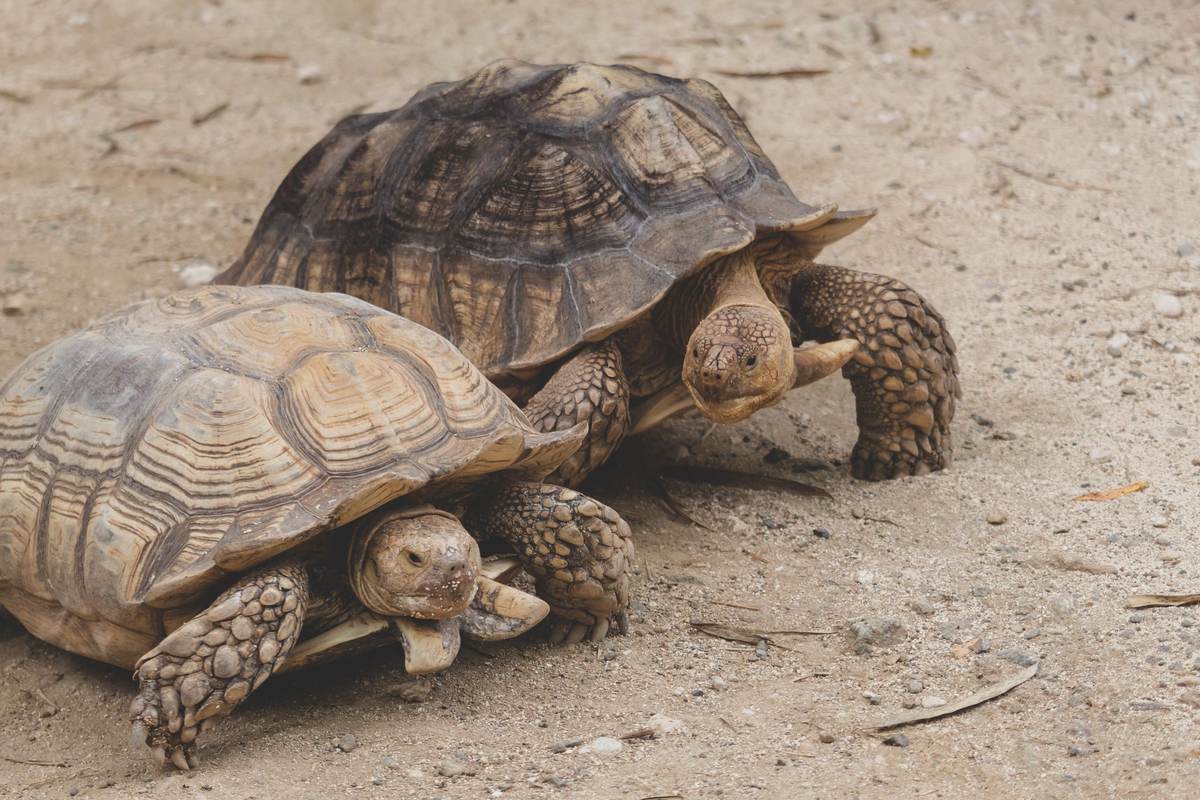
The photograph above is the size warning in this guide, in one frame. Sulcatas do not stay small, and the difference between the two animals pictured is the difference a keeper signs up for with this species. Before choosing a sulcata, plan for an adult sulcata, rather than an assumed age for either animal in the photograph — 24–30 inches, over 100 pounds, 70+ years — not for the smaller animal in front of it.
Frequently asked questions
Which tortoise species stays smallest?
Russian and Greek tortoises reach 8–10 inches as adults, and Hermann’s tortoises 8–11 inches. Even the smallest species here is a 40–50+ year commitment that needs a full enclosure, not a small tank.
Which tortoises hibernate?
Russian, Hermann’s, and Greek tortoises hibernate. Red-footed and sulcata tortoises do not. Get species-specific hibernation guidance and veterinary input well before autumn — this table does not give a hibernation protocol.
Why is humidity different for each tortoise species?
Because the species come from different habitats. Red-footed tortoises need 70–80% humidity; sulcatas need a dry 30–40%. Housing two species to one humidity number will be wrong for at least one of them.
Keep reading
- Pet tortoise care guide — choosing a species, housing, diet, and hibernation, built on this table
- Leopard gecko care parameters — one species, one set of numbers
- Crested gecko care parameters — one species, one set of numbers