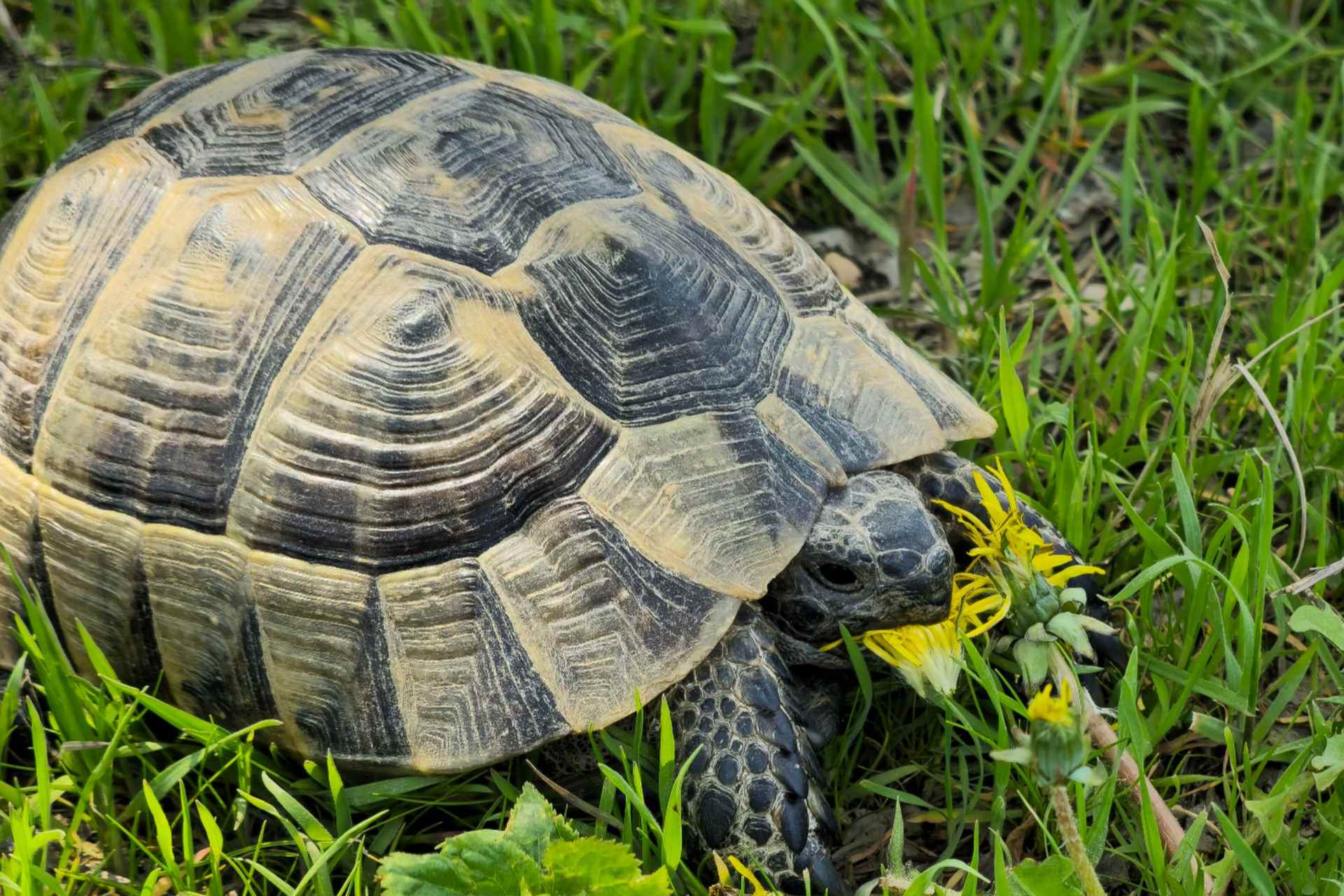
Pet tortoises are land tortoises — domed shells, sturdy elephant-like hind legs, no webbed feet — and they are kept very differently from aquatic turtles. The word “tortoise” on its own, though, describes a whole group of animals with different needs. This guide is organised around that fact: first the species decision, then housing, diet, and hibernation for the species chosen.
Five species are compared throughout this guide: Russian, Hermann’s, red-footed, Greek, and sulcata tortoises. They are the species a new keeper in the UK or the US is most likely to meet, and together they cover the full spread of the group — from smaller species that may hibernate to a large, long-lived sulcata. If the species you are considering is not one of these five, do not apply this guide’s numbers to it. Get that species’ numbers separately.
Which tortoise species should I choose?
Start with adult size and lifespan, because those two numbers decide everything else. Russian and Greek tortoises reach 8–10 inches as adults; Hermann’s tortoises reach 8–11 inches. A red-footed tortoise reaches 10–14 inches. A sulcata tortoise reaches 24–30 inches and can exceed 100 pounds. The first four can live in indoor housing scaled to a large table or room-sized enclosure; a sulcata needs outdoor-scale space as an adult and a plan for an animal that will outlive most mortgages.
Lifespan follows the same split. Russian tortoises live 40–50+ years; Hermann’s and Greek tortoises 50+ years; red-footed tortoises 30–50 years; sulcatas 70+ years. Every species on this page is a multi-decade commitment, and the sulcata is a lifetime-scale one. “Who looks after this animal if I cannot?” is a question to answer before buying, not after.
Then check humidity and diet, which are where species get confused most often. Most of the five need 40–60% humidity — except red-footed tortoises, which need 70–80%, and sulcatas, which need a dry 30–40%. Most are high-fibre herbivores — except red-footed tortoises, which are omnivorous and take some fruit, vegetables, and a small amount of animal protein, and sulcatas, for which high-protein food and fruit are to be avoided. A setup built for “a tortoise” that mixes those requirements will be wrong for at least one species in it.
Swipe or scroll across the table to compare values. Use the full source notes with each range.
| Species | Adult length | Lifespan | Hibernates? |
|---|---|---|---|
| Russian | 8–10 inches (20–25 cm) | 40–50+ years | Yes |
| Hermann’s | 8–11 inches (20–28 cm) | 50+ years | Yes |
| Red-footed | 10–14 inches (25–36 cm) | 30–50 years | No |
| Greek | 8–10 inches (20–25 cm) | 50+ years | Yes |
| Sulcata | 24–30 inches (61–76 cm; can exceed 100 lb) | 70+ years | No |
Full parameters, including temperatures, humidity, and diet by species, are on the tortoise parameter page. Sources: tortoise.org, The Tortoise Table, and species-guide consensus. Temperatures in °C and housing and UVB values by species are in the parameter table.
How should a tortoise be housed?
Housing follows the species. Smaller species are commonly kept in tortoise tables — large, open-topped wooden enclosures kept indoors — with outdoor access in warm weather. Larger species, and all species in suitable climates, spend part or all of their time in secure outdoor enclosures. The housing question to answer first is not “table or outdoor pen?” but “how much floor space will this species need as an adult, indoors and outdoors, in this climate?”
Whatever the housing type, it must hold a temperature gradient: a basking spot and a cooler ambient area, measured where the tortoise actually sits. Basking temperatures are 95–100°F (35–38°C) for Russian, Hermann’s, and Greek tortoises, 90–95°F (32–35°C) for red-footed tortoises, and 100°F+ (38°C+) for sulcatas; ambient temperatures are 75–85°F (24–29°C) for most species, 80–85°F (27–29°C) for red-footed, and 80–90°F (27–32°C) for sulcatas. A single temperature for the whole enclosure is not a gradient, and a tortoise without a gradient cannot regulate its own body temperature.
Outdoor housing must be secure in both directions: the tortoise cannot escape, and predators and other animals cannot get in. Tortoises dig, push, and climb low barriers more effectively than their speed suggests. Check fencing from the tortoise’s side — at ground level, in corners, and wherever the ground is soft enough to dig — and provide shade, shelter, and a water dish in every outdoor area. An outdoor enclosure with no retreat from sun or rain is not finished. The enclosure dimensions and fence details differ by species and are given, with their sources and limits, in the tortoise parameter table — including the requirement, where a source gives one, that walls be buried at least 12 inches (30 cm) and topped against predators. No photograph of a pet tortoise outdoor enclosure is shown on this page: the outdoor photograph considered for this slot showed a giant tortoise behind zoo-style wire fencing, whose species was not identified, and it must not be used as an example of pet tortoise housing.
How much floor space does a tortoise need?
Housing sizes are given in full, by species, in the tortoise parameter table. In short: a Russian tortoise needs an indoor minimum of 24.5–32 square feet; a red-footed tortoise needs at least 6 × 4 feet indoors, with 4 × 8 feet more secure, and an open tortoise table is not recommended for this species because it cannot hold the high humidity it needs; a sulcata is not suitable for long-term indoor keeping as an adult and needs at least 150 square feet outdoors, with a target of 300–800 square feet and a heated night house. Hermann’s and Greek housing values have no consensus and the weakest sources — their ranges in the parameter table are labelled pending review and must not be treated as verified standards.
Do not use a shopping-list size as an adult minimum: the 8 × 4 foot size sometimes listed for red-footed tortoises is a seasonal indoor temporary size only, not an adult minimum. And do not cite “300 square feet” for sulcatas as a single figure — the source page that states it contradicts its own arithmetic (20 × 10 feet is 200, not 300), and the parameter table gives the range instead.
Do tortoises need UVB?
Yes — all five species need UVB, and the housing and UVB rows in the tortoise parameter table are pending review by a veterinary reviewer or breeder. Russian, Hermann’s, and Greek tortoises are Ferguson Zone 3; sulcatas are Zone 4; for red-footed tortoises no Zone number was verified in an authoritative source, so none is given. Do not confuse the two UVI figures in the table: the wild basking-spot UVI exposure range (for example 2.9–7.4 for the Mediterranean species) describes what the animal can be exposed to outdoors, while the indoor basking-gradient target (for example UVI 3.0–4.0 for Russian tortoises, measured with a Solarmeter) is a separate indoor measurement. Where tube percentages, distances, or gradient targets have no direct source — for Hermann’s and Greek tortoises — the table leaves them blank pending review rather than borrowing another species’ values.
Photo slot — pending
Indoor tortoise table
How hot and how humid should it be?
Use the species’ numbers, not a general tortoise number. The table on the parameter page gives basking spot, ambient temperature, and humidity for each of the five species. The pattern to remember is that the species differ more from each other than any two care guides differ: red-footed tortoises need the highest humidity and the warmest ambient range; sulcatas need the driest air and the hottest basking spot.
Measure humidity where the tortoise spends time, and expect it to vary across the enclosure. A single hygrometer reading at one end of a large enclosure describes one spot, not the enclosure. Damp hides and humid microclimates can sit inside a drier enclosure for species that need them, but the general humidity for the species still has to be right — a damp corner does not fix a dry enclosure, and a dry corner does not fix a saturated one.
Seasonal change matters more for tortoises than for the geckos in this site’s other guides, because several species hibernate and all of them respond to day length and temperature. Track temperature and humidity through the seasons, and plan the hibernation decision — covered below — well before autumn, not when the weather has already turned.
What do tortoises eat?
Most of the five species eat a high-fibre diet of grasses and weeds: Russian, Hermann’s, and Greek tortoises on high-fibre grasses and weeds, sulcatas on high-fibre grasses with no high-protein food and no fruit. The photograph at the top of this page — a tortoise on grass with its mouth at a dandelion flower — illustrates that pattern: grazing, not prepared food, is the core of the diet.
Red-footed tortoises are the exception, and the exception is the point of choosing a species first. They are omnivorous: fruit and vegetables plus a small amount of animal protein, alongside plant matter. A red-footed tortoise fed a strict grass-only diet, or a sulcata fed fruit and high-protein food, is being fed against its species’ needs. Diet guides that say “tortoises eat lettuce” are not guides to any of these species.
Whatever the species, the diet should be varied within its pattern, offered daily in amounts the animal finishes, with fresh water always available. Avoid foods known to be unsuitable for the species, and check any new plant against a reliable tortoise-safe plant reference — such as The Tortoise Table — before offering it. Garden plants are not all safe, and “it ate it” is not evidence that it should have.
Do pet tortoises hibernate?
It depends on the species. Russian, Hermann’s, and Greek tortoises hibernate; red-footed and sulcata tortoises do not. That split is decided by the species, not by the keeper’s preference or by the local climate, and it must be known before the first autumn — not discovered when the animal starts slowing down.
Hibernation is a decision with preparation attached: the animal’s health, weight, and condition must be suitable, the hibernation environment must be controlled, and the animal must be monitored. This guide does not give a hibernation protocol, and no protocol should be followed from a general guide alone. If your species hibernates, get species-specific guidance and veterinary input well before the season, and do not hibernate an animal that is unwell, underweight, or new to your care without professional advice.
For species that do not hibernate, winter care means holding temperature, humidity, and light inside the species’ ranges through the cold months, when indoor heating and shorter days push all three in the wrong direction. A red-footed or sulcata tortoise that is allowed to cool down for the winter is not hibernating — it is being kept too cold.
How do I handle a tortoise?
Handle tortoises gently, with both hands supporting the shell, and keep handling low and brief. Tortoises are not built to be carried around, and they do not benefit from frequent handling the way a social mammal might. Pick up only when needed — for health checks, enclosure cleaning, or moving between indoor and outdoor housing — and put the animal down the right way up, on a stable surface, without dropping it even a short distance.
Learn the individual animal by watching rather than by holding. Activity level, appetite, and the condition of the shell, eyes, and legs are all visible without handling, and they are the observations that matter day to day. A tortoise that is handled constantly is a tortoise that spends its time being stressed instead of grazing, basking, and resting — the activities its health actually depends on.
Wash hands before and after handling, and keep tortoises away from food preparation areas. This is basic hygiene for any reptile, and it protects both the animal and the household.
How do I know if something is wrong?
This section covers recognition and prevention only. It does not diagnose or treat. If a tortoise stops eating, loses weight, or shows any of the signs below, see a qualified exotics veterinarian — and for a tortoise, do not wait for a long “watch and see” period. Tortoises hide illness, and by the time a problem is obvious it is often advanced.
Check the species’ parameters first: basking temperature, ambient temperature, humidity, and diet. Many tortoise problems trace back to a mismatch between the enclosure and the species — most often humidity or diet for the wrong species. Correct the parameters, then watch, and seek help if the problem persists.
Signs worth a prompt veterinary visit include continued appetite loss or weight loss, discharge from the eyes or nose, difficulty breathing, swelling, shell damage or softness, abnormal growth of the shell — known as pyramiding, which is linked to humidity and diet and is prevented rather than corrected at home — and any injury or lethargy that does not lift once the enclosure is in range. Pyramiding prevention is a humidity and diet story: hold the species’ humidity range and feed the species’ high-fibre diet, and raise any shell concern with a veterinarian early, while it can still be assessed properly.
Keep a record: weight, feeding, and any change in behaviour or shell condition, with dates. For a long-lived animal, the record is the only way a slow change becomes visible. Weigh regularly on the same scale, and note the enclosure readings alongside the weight — a pattern across months is worth more than any single reading.
Veterinary disclaimer. This guide helps owners recognise problems early and know when an animal needs a vet. It is not veterinary advice, and it contains no treatment plans or medication doses. If your tortoise is sick, see a qualified exotics veterinarian. Read the full Veterinary Disclaimer.
How should I assess a home before choosing a tortoise?
Start with the space and conditions you can actually provide throughout the year. A sunny garden is not automatically a usable enclosure, and a spare room is not automatically a suitable indoor habitat. Consider access to electricity for controlled equipment, drainage, secure boundaries and a way to separate the animal from household hazards. The adult animal’s needs should determine the plan even when the tortoise available now is small.
Species identity is central to that assessment. An enclosure suited to a dry-climate grazing species should not be assumed suitable for a red-footed tortoise. Ask for reliable identification and a care history rather than choosing by shell colour or a seller’s description of temperament. If identity or legal documentation is uncertain, resolve that before arranging care. This guide cannot supply the local rules for every purchase or movement of an animal.
Think about who can provide care when circumstances change. Moving home, losing access to a garden or being unable to maintain a heated shelter can change whether a setup remains viable. Speak to people who care for adult animals of the species, not just people selling juveniles. The decision is easier to make responsibly before the animal depends on the enclosure you have promised it.
What makes an outdoor space different from a garden?
A dedicated enclosure allows you to control access, planting and boundaries. Check for toxic or unidentified plants, treated surfaces, contaminated soil and places where water collects. A garden that looks green may offer unsuitable food, and an area that looks enclosed may have escape routes at ground level. Observe what happens in shade, sun and wet weather rather than judging the site during a comfortable visit outdoors.
A tortoise needs shelter it can reach and use. Do not confuse exposure to daylight with an unrestricted choice of safe conditions. If the animal cannot retreat from heat, cold or rain, the space has not become suitable simply because it is outdoors. Check the species-specific parameter table and seek experienced advice about the local climate before making an outdoor plan the animal’s permanent arrangement.
Keep pet dogs, wildlife and equipment hazards in mind. Supervision is useful but does not replace secure boundaries and an appropriate cover where needed. Never use the giant-tortoise enclosure photograph in a collection of images as evidence that a pet species’ enclosure is adequate. Appearance, animal identity and actual husbandry requirements are separate questions.
How do food selection and enclosure management connect?
Food is part of the habitat, not just something placed in a dish. Learn to identify plants before offering them and avoid material exposed to pesticides or other contamination. The diet row for the species is the starting point. A food accepted eagerly is not necessarily suitable as the main diet, and a mixed collection of vegetables does not automatically reproduce a high-fibre grazing diet.
Keep feeding areas clean enough to observe what is being eaten and to remove spoiled food. Check that the animal can reach drinking water and move through the enclosure without being forced over an obstacle. Record changes in appetite alongside environmental changes, because a feeding concern may be accompanied by a temperature, access or health problem. Do not use appetite alone to assess the animal’s overall condition.
Supplements and specialist diets should be considered within the full care plan. This page does not provide medication doses or a universal supplementation recipe across species. When advice conflicts, bring the diet history and equipment information to a qualified exotics veterinarian. The unresolved entries in the parameter library are deliberate warnings that a species-specific value still needs review.
What information should travel with the animal?
Keep identification, acquisition records, veterinary history and the current care routine together. Include what the animal eats, the enclosure readings and the equipment actually in use. A record of a lamp model is more informative than saying that a reptile lamp is fitted. A description of where readings are taken is more useful than copying a target from a care sheet without checking the enclosure.
Show another caregiver how to inspect boundaries, reach shelters and operate doors safely. Explain which observations are normal for this animal and which changes need a veterinary call. If hibernation is relevant to the species, the plan should already have been discussed with an experienced professional; it should not be started because the animal becomes less active or because a calendar suggests it is time.
Keep the records useful rather than elaborate. Dates, clear observations and changes in circumstances help explain a problem. They do not turn a general care guide into a diagnosis, and they should never delay help for an injured or deteriorating animal. The practical goal is a keeper who knows the species, understands the limits of the enclosure and can recognise when the next decision needs professional advice.
Frequently asked questions
What is the easiest tortoise for a beginner?
There is no easy tortoise — all five species compared here live for decades. The practical starting point is the smallest adult size with the simplest housing you can provide well: for many keepers that means a Russian, Hermann’s, or Greek tortoise, chosen on adult size, lifespan, and whether it hibernates, rather than on appearance.
How big do sulcata tortoises get?
24–30 inches long as adults, and they can exceed 100 pounds, with a lifespan of 70+ years. A sulcata is an outdoor-scale, lifetime-scale commitment, and it is the species most often surrendered when its adult size was not planned for.
Do tortoises hibernate?
Some do and some do not. Russian, Hermann’s, and Greek tortoises hibernate; red-footed and sulcata tortoises do not. The decision is set by the species, and hibernation needs preparation and veterinary input well before autumn.
What do tortoises eat?
Mostly high-fibre grasses and weeds. Red-footed tortoises are the exception — omnivorous, with fruit, vegetables, and a small amount of animal protein. Sulcatas must not be fed high-protein food or fruit.
How long do pet tortoises live?
30–50 years for red-footed tortoises, 40–50+ years for Russian tortoises, 50+ years for Hermann’s and Greek tortoises, and 70+ years for sulcatas. Plan for the species’ full lifespan, including who cares for the animal if you cannot.
Can tortoises live outside all year?
That depends on the species and the climate. Outdoor housing is valuable in warm weather, but temperature, humidity, shelter, and — for hibernating species — the hibernation decision must all be planned for the local climate. An outdoor enclosure without shade, shelter, and secure fencing is not ready for any tortoise.
What is tortoise pyramiding?
Pyramiding is abnormal, raised growth of the shell scutes. It is linked to humidity and diet, and it is prevented by holding the species’ humidity range and feeding the species’ high-fibre diet — not corrected by home treatment. Raise any shell concern with a qualified exotics veterinarian early.
Keep reading
- Tortoise care parameters by species — the full five-species table behind this guide
- Leopard gecko care guide — a shorter-lived, indoor reptile with a hot spot and dry air
- Crested gecko care guide — a climbing gecko that needs height, cool air, and humidity cycles
- About Scaled School — how the numbers in this guide were checked