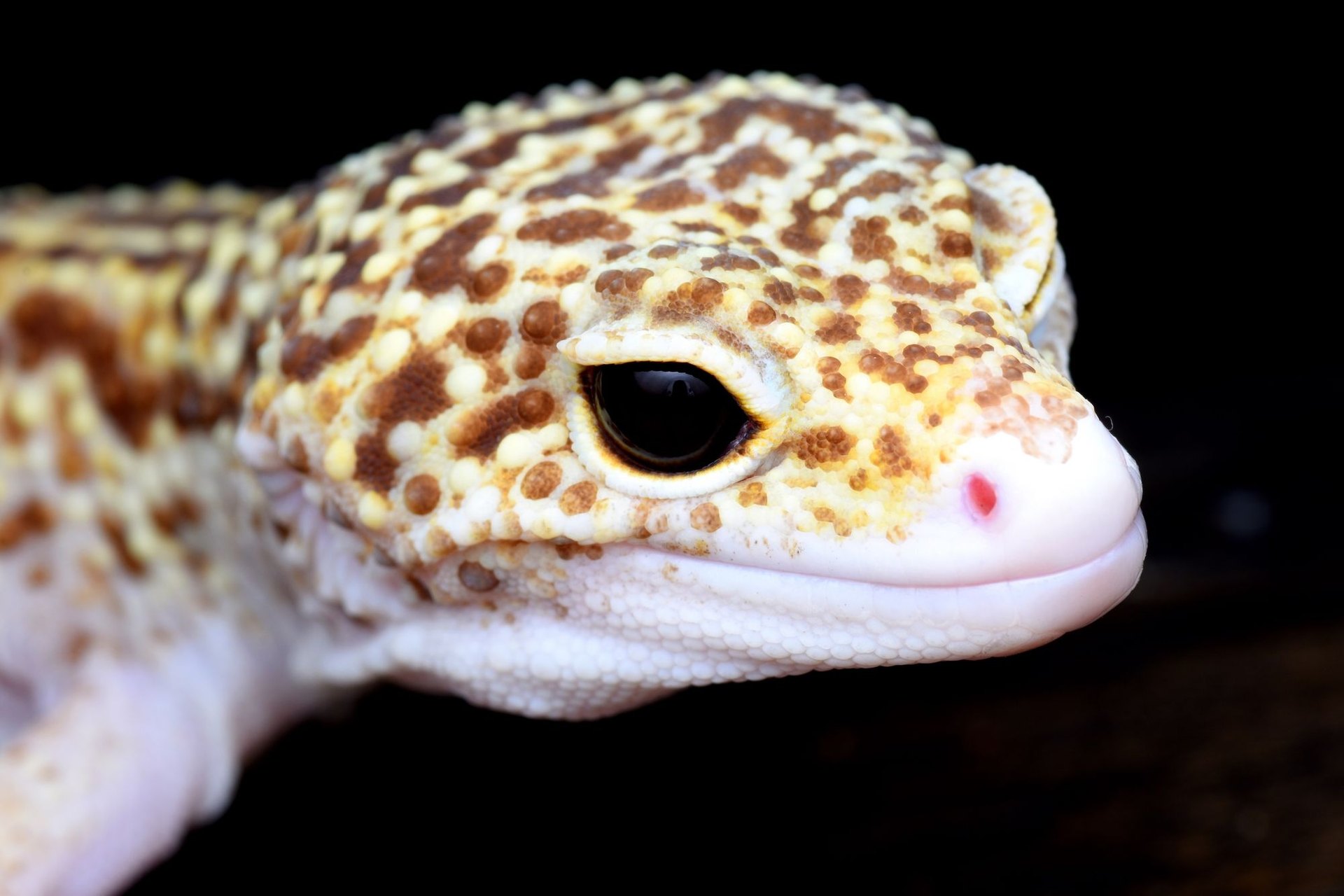
Leopard geckos (Eublepharis macularius) are ground-dwelling geckos, and that single fact shapes almost every decision in this guide. They live on the floor of the enclosure, not in the canopy, so floor space matters more than height. They are also one of the few geckos with movable eyelids — the close-up above shows them clearly — and they store fat in a thick tail, which is one of the first places a health problem shows.
Adults reach 8–10 inches (20–25 cm) and, in captivity, live 15–20 years, with some individuals living past 20. That lifespan is the real commitment in this guide: a leopard gecko is not a short-term pet, and the enclosure, heating, and feeding routine you set up in the first week will be repeated for years. Choose equipment that can be maintained for that long, not just equipment that looks finished on day one.
What does a leopard gecko need, at a glance?
Swipe or scroll across the table to compare values. Use the full source notes with each range.
| Parameter | Range |
|---|---|
| Hot spot | 88–94°F (31–34°C) |
| Cool end | 70–77°F (21–25°C) |
| Humidity | 30–40% |
| Adult length | 8–10 inches (20–25 cm) |
| Minimum enclosure (adult) | 20-gallon long (30×12×12 in) to start; 40-gallon (36×18×18 in) recommended |
| Lifespan | 15–20 years in captivity, occasionally 20+ |
| Feeding | Juveniles once daily; adults every 2–3 days |
| Calcium and D3 | Calcium at every feeding; D3 once or twice a week when no UVB is provided |
| UVB | Low-intensity UVB (Ferguson Zone 1, UVI 0.5–1.5) recommended but not compulsory; without UVB, D3 supplementation is essential. This UVB wording is pending review by a veterinary reviewer or breeder and is not final. |
Sources: ReptiFiles leopard gecko guide and mainstream breeder standards; UVB wording follows the Arcadia lighting guide and recent literature consensus. The full table, with the same values, is on the leopard gecko parameter page. Ranges are ranges — do not treat a single number inside them as a target that must be hit exactly. The UVB wording in this table is pending review by a veterinary reviewer or breeder and is not final.
What size enclosure does a leopard gecko need?
Start from the floor. An adult leopard gecko needs at least a 20-gallon long enclosure (30×12×12 inches), and the current recommendation is a 40-gallon enclosure (36×18×18 inches). The difference between the two numbers is the difference between a minimum that works and a size that gives the animal a real temperature gradient: a longer enclosure makes it easier to hold a hot spot at one end and a cool end at the other, with hides in between, instead of heating the whole box to one temperature.
Height is the least important dimension for this species. A tall enclosure with little floor space is a poor trade. What matters is a floor long enough for three zones — warm hide, middle ground, and cool hide — plus a humid hide, which is covered below. If you are choosing between a taller tank and a longer one at the same volume, choose the longer one.
Check the enclosure size against the animal in front of you, not just against the label on the box. A 40-gallon enclosure is the recommended size for an adult; a juvenile can start smaller, but the adult size is the size to plan and budget for. Buying the adult enclosure once is cheaper, and less disruptive, than upgrading through two or three enclosures while the animal grows.
How should the enclosure be set up?
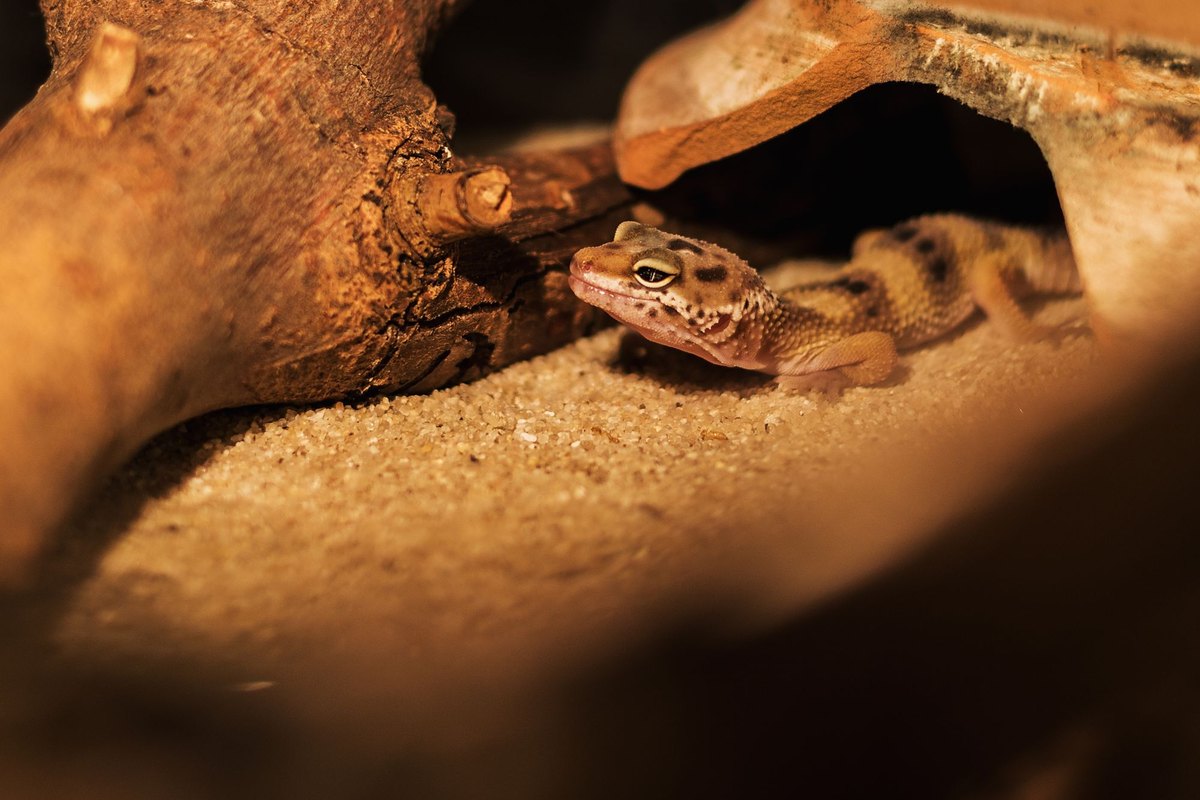
Set up the enclosure in zones. The warm end holds the heat source and a warm hide over the hot spot of 88–94°F (31–34°C). The cool end holds a second hide at 70–77°F (21–25°C). Between them, the animal needs open floor to move, and a humid hide — a hide with a damp interior — that supports shedding at the enclosure’s general humidity of 30–40%.
Hides are not decoration. A leopard gecko without a hide at each end of the gradient has to choose between feeling safe and being at the right temperature, and it will usually choose safety. Put a hide in the warm zone, a hide in the cool zone, and a humid hide somewhere the animal can reach without crossing open ground it avoids. Add a water dish the animal can drink from, and keep the layout stable: moving hides and decor around forces the animal to re-learn where safety is.
Substrate — what covers the floor — should be chosen with the feeding routine in mind. Loose, fine substrates can be swallowed with food, and that risk is highest in animals that strike at insects on the floor. Whatever substrate you choose, feed in a way that keeps insects off loose material where possible, and watch for the warning signs listed in the health section. The substrate decision, the feeding method, and the temperature gradient are one decision, not three.
How hot and how humid should it be?
Hold the hot spot at 88–94°F (31–34°C) and the cool end at 70–77°F (21–25°C), and measure both with thermometers placed where the animal actually sits — on the floor inside the hides — not on the glass or in the air at the top of the enclosure. A gradient that exists on a thermostat display but not on the floor is not a gradient the animal can use.
Humidity for the enclosure as a whole is 30–40%. That is dry by the standards of many tropical reptiles, and it is deliberate: leopard geckos come from dry habitats, and constantly damp conditions cause their own problems. The humid hide is the exception — it stays damp inside while the rest of the enclosure stays dry — and it is what makes shedding work at 30–40% general humidity.
Check both numbers at different times of day and in different seasons. Room temperature changes move the cool end first, and a cool end that drops below the range leaves the animal with nowhere to cool down that is still inside the enclosure. If the cool end will not stay in range, fix the room or the enclosure position before adding more heat to the warm end.
What do leopard geckos eat, and how often?
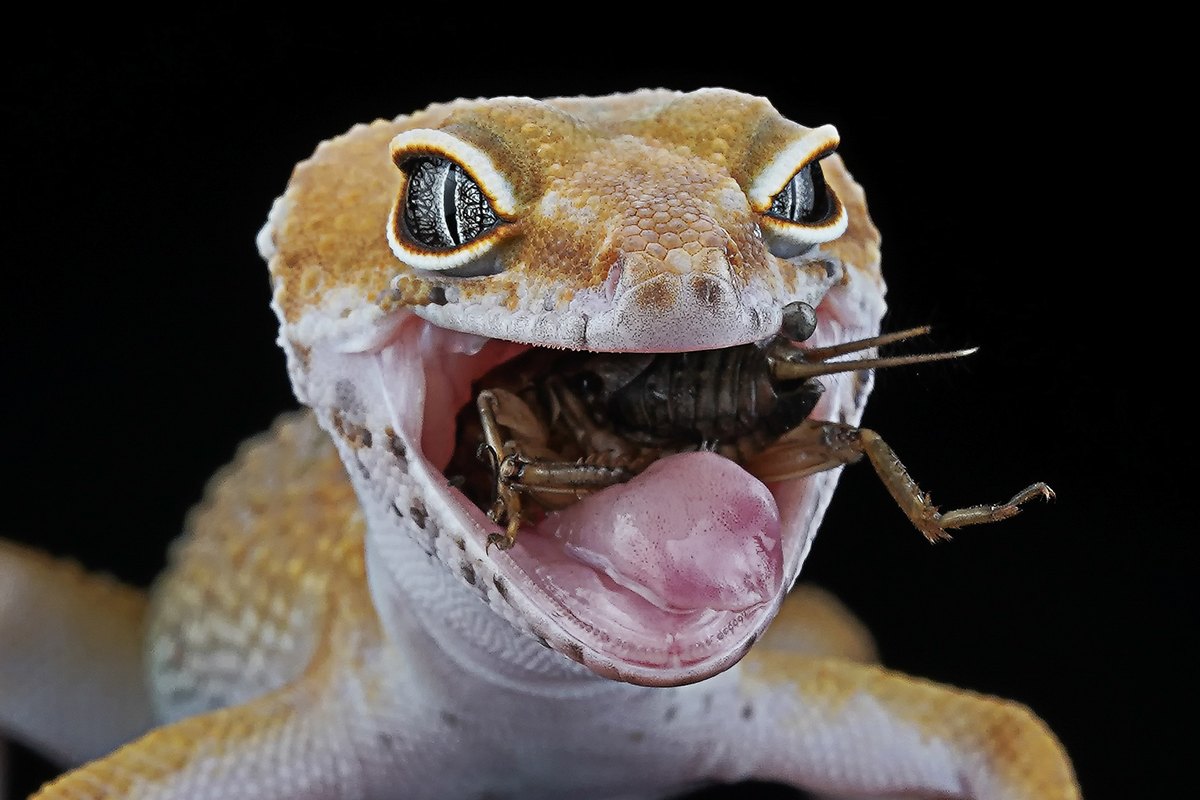
Leopard geckos eat insects. Feed juveniles once a day and adults every 2–3 days, offering suitable feeders according to the animal’s condition and the agreed care plan rather than leaving live insects in the enclosure. Uneaten live insects left overnight can stress the animal and bite at skin and eyes, so remove what is not eaten.
Coat feeder insects in calcium powder at every feeding. Add vitamin D3 once or twice a week when no UVB lighting is provided. That pairing is the point: calcium without D3, or D3 without a reason to need it, is not the same routine. If low-intensity UVB is provided, the D3 routine changes — follow the UVB guidance on the parameter page and keep one consistent routine instead of mixing two.
Variety in feeder insects is worth more than any single “best” feeder. Different insects differ in size, shell, and fat content, and a rotation avoids the problems of a single-insect diet. Whatever insects are offered, they should be appropriately sized for the animal — roughly no wider than the space between the gecko’s eyes is the usual rule of thumb keepers use — and gut-loaded, meaning fed well before they are offered, so the gecko eats an insect that has itself eaten.
Do leopard geckos need UVB?
Low-intensity UVB is recommended but not compulsory for leopard geckos: Ferguson Zone 1, UVI 0.5–1.5. The reason it is “recommended but not compulsory” rather than a flat yes or no is that leopard geckos can meet their vitamin D3 needs through supplementation instead — but only if the supplementation actually happens, every week, at the frequency in the table above.
This UVB wording is pending review by a veterinary reviewer or breeder and is not final. If no UVB is provided, D3 supplementation is essential, not optional. If UVB is provided, it must be low-intensity and set up so the animal can move in and out of the UVB zone, just as it moves between warm and cool ends. A UVB lamp the animal cannot escape is the same mistake as a heater the animal cannot escape.
Do not treat UVB as a substitute for heat, or heat as a substitute for UVB. They do different jobs: heat sets the temperature gradient the animal uses to digest and move; UVB supports vitamin D3 synthesis. An enclosure can have one right and the other wrong, and the animal pays for whichever is wrong.
How do I handle a leopard gecko?
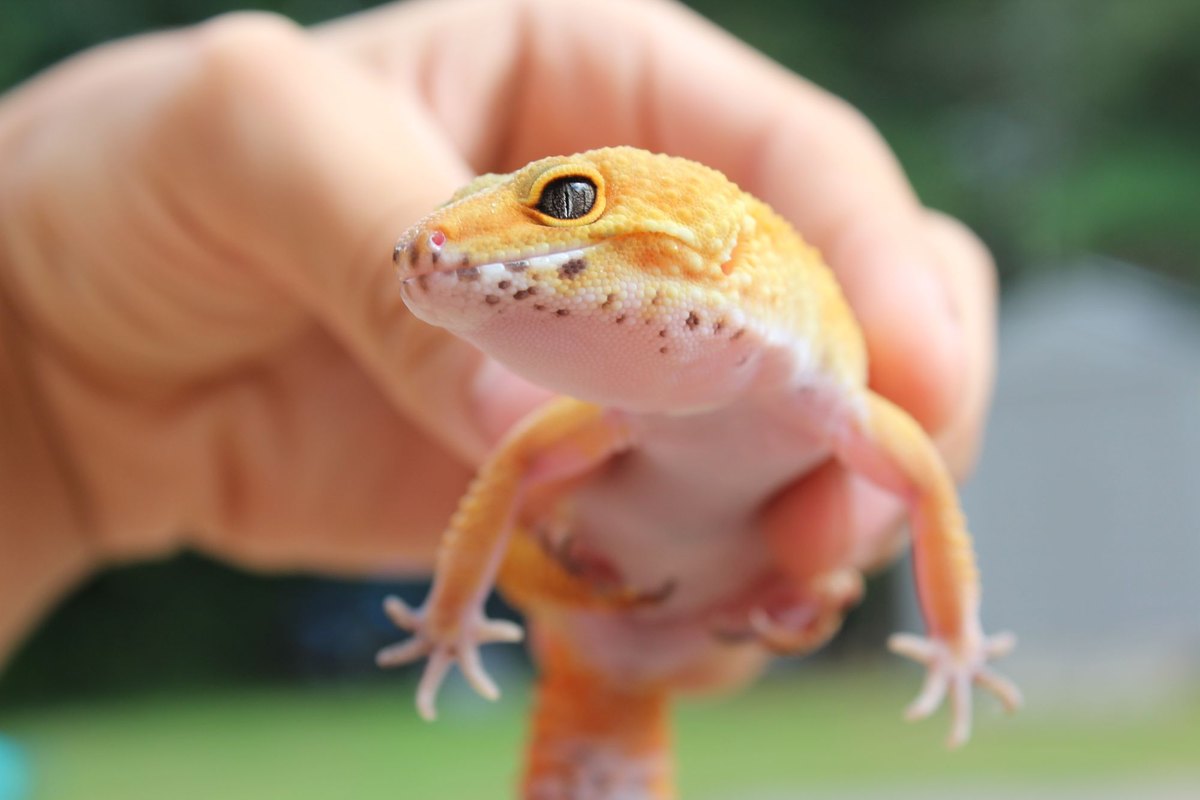
Handle gently, low over a surface, and with the animal supported — never by the tail. A leopard gecko’s tail can be dropped if it is grabbed, and while it regrows, the regrown tail is not the same as the original. Support the body, let the animal walk from hand to hand rather than restraining it, and keep sessions short at first, especially in the first weeks after arrival.
New animals need time before handling becomes routine. Let the gecko settle into its enclosure, eat on its normal schedule, and use its hides confidently before handling is treated as normal. Handling that starts too soon, too often, or for too long teaches the animal that hands mean stress, and that lesson is hard to undo.
Watch the animal’s body during handling. A gecko that is calm moves slowly and deliberately; a gecko that is stressed moves in bursts, tries to climb away constantly, or freezes. End the session on a calm note where possible, and return the animal to its enclosure rather than pushing through stress to finish a handling “session.”
How do I know if something is wrong?
This section covers recognition and prevention only. It does not diagnose or treat. If a leopard gecko stops eating, loses weight, or shows any of the signs below, see a qualified exotics veterinarian — the sooner the better for a small animal that hides illness well.
Check temperature, humidity, and the feeding routine while arranging veterinary advice for a concerning change. A hot spot below range, a cool end that is too warm, or a humid hide that has dried out will each, on their own, change appetite, shedding, and activity. Correct obvious husbandry faults without delaying veterinary care. If the problem persists once the parameters are in range, that is the point to seek veterinary help, not the point to wait longer.
Signs worth a prompt veterinary visit include a tail that is visibly thinning, weight loss that continues over more than one feeding cycle, repeated difficulty shedding, swelling or deformity of the jaw or limbs, lethargy that does not lift when temperatures are corrected, and any sign of injury or prolapse. Metabolic bone disease — the condition linked to calcium and D3 shortfalls — is a prevention story, not a home-treatment story: the calcium-at-every-feeding and D3 routines in this guide, plus the UVB decision, are how it is prevented.
Keep a simple record: feeding dates, shed dates, and weight if you weigh the animal. A record turns “it seems thinner” into a number, and a number is what a veterinarian can use. Note the date and the parameter readings alongside any change, so a pattern — for example, appetite falling every time the cool end rises — becomes visible instead of anecdotal.
Veterinary disclaimer. This guide helps owners recognise problems early and know when an animal needs a vet. It is not veterinary advice, and it contains no treatment plans or medication doses. If your leopard gecko is sick, see a qualified exotics veterinarian. Read the full Veterinary Disclaimer.
How can I check a setup before bringing a gecko home?
Treat an empty enclosure as a chance to find faults without making the animal live through them. Put the hides, water dish and feeding area in their intended positions before you assess the gradient. A reading from an empty glass box cannot tell you whether a hide traps heat or whether a large piece of decor blocks the route to the cool end. Look at the enclosure from the animal’s height and check that a sheltered route connects the places it will need.
Check the thermostat instructions and the position of its probe. A controller can only respond to the temperature at its sensor; a loose probe or a sensor moved during cleaning can change what the heater does. Secure equipment as its manufacturer directs and keep cables away from the animal’s path. A thermometer is a way to check the result independently, rather than assuming the controller display describes every surface in the enclosure.
Think about maintenance while the setup is still easy to rearrange. You should be able to reach the water dish, remove waste and inspect hides without dismantling a heavy stack of decor. Support rocks and other heavy objects securely so burrowing or cleaning cannot undermine them. Choose furnishings with accessible surfaces and openings that will remain appropriate as the gecko grows. A striking photograph of a habitat does not prove that it is safe to use or practical to clean.
What should a useful care record contain?
Write down observations that another person could understand. Instead of recording that the enclosure was fine, note where the readings were taken and whether the animal could reach its warm and cool refuges. Instead of recording that the gecko ate well, describe the feeder offered, whether it was accepted, and whether any insects were removed. Include changes to equipment, room conditions and the supplement product being used.
Records are especially useful when something changes. A gecko may remain hidden while you are watching but explore when the room is quiet. Distinguish not seeing an animal eat from finding that food was consistently refused. Avoid repeatedly disturbing a hide simply to obtain a reassuring sighting. If there is a health concern, a clear history helps a veterinarian assess it without turning normal privacy into an assumption that nothing is happening.
An observation record is not a diagnosis. Do not use a chart to justify waiting when an animal is injured, weak or visibly deteriorating. Describe the concern and arrange appropriate veterinary advice. Bring the supplement packaging and equipment details if asked, because products with similar labels can have different formulations. This guide deliberately does not prescribe medication, force-feeding or a treatment schedule.
How should cleaning fit around the gecko’s behaviour?
Remove soiling and leftover food as part of ordinary care, while giving the animal a secure retreat. Check hidden areas rather than judging cleanliness from the front glass. Replace contaminated material and follow the label instructions for any cleaning product suitable for reptile equipment. Do not mix household chemicals or return furnishings with cleaning residues to the enclosure. Keep the animal away from cleaning solutions and let surfaces become safe for use before it returns.
Separate reptile equipment from food-preparation equipment. Wash hands after handling the gecko, feeder insects, waste or enclosure furnishings. Keep care equipment organised so a visiting caregiver can identify what belongs to this enclosure. These habits help with animal care and household hygiene without requiring the habitat to be stripped bare every time an item needs cleaning.
When a change is necessary, change with a reason and keep a record. Moving the feeding area, replacing the substrate and altering heating together makes it difficult to identify which change affected behaviour. Essential safety corrections should not be postponed, but optional cosmetic alterations can wait until the care routine is stable. Predictable access to shelter, water and a usable gradient matters more than repeatedly redesigning the habitat.
What should I prepare for a caregiver or equipment fault?
Show a caregiver the actual animal’s routine and the parameter page, rather than handing over a general shopping list. Explain how to recognise the warm and cool ends, where drinking water belongs, which supplement is used and how to contact the veterinarian. Label equipment controls clearly. A caregiver should know which changes they can make and which concerns require a call instead of an improvised solution.
Consider where the animal could be kept safely if heating equipment failed or the enclosure needed repair. Do not improvise with unregulated heaters or leave the gecko in a container exposed to direct sun. Check the available options with a reptile-experienced veterinarian or knowledgeable keeper before an emergency. An emergency plan is useful precisely because the animal’s needs continue when the usual equipment is unavailable.
How should I interpret a care range when sources disagree?
A range does not mean that every location in the enclosure should be held at the same setting. Read the label beside the value: a hot spot, a cool retreat and general humidity describe different parts of the environment. Measure the relevant location, check the equipment and consider the animal’s ability to choose between conditions. Copying a temperature without its context can produce a setup unlike the one the source was describing.
The UVB entry on this site remains pending review. Keep that qualification with the value when making notes or sharing the table. The label does not mean that lighting can be ignored; it means that the working figure needs species-specific professional review before it is presented as a settled standard. If you find a stronger source or a conflict, send it through the Contact page so the underlying parameter library can be reviewed consistently across the guide and reference table.
Frequently asked questions
What size tank does a leopard gecko need?
At least a 20-gallon long enclosure (30×12×12 inches) for an adult, with a 40-gallon enclosure (36×18×18 inches) as the current recommendation. The longer enclosure makes a real warm-to-cool gradient easier to hold.
How hot should a leopard gecko enclosure be?
Hot spot 88–94°F (31–34°C) and cool end 70–77°F (21–25°C), measured on the floor where the animal sits, inside the hides.
Do leopard geckos need UVB lighting?
Low-intensity UVB (Ferguson Zone 1, UVI 0.5–1.5) is recommended but not compulsory. Without UVB, vitamin D3 supplementation once or twice a week is essential.
How often should I feed a leopard gecko?
Juveniles once a day; adults every 2–3 days. Coat feeder insects in calcium at every feeding, and remove uneaten live insects from the enclosure.
How long do leopard geckos live?
15–20 years in captivity, with some individuals living past 20. Plan the enclosure and routine for that lifespan, not for the first year.
Why is my leopard gecko not eating?
Check temperature, humidity, and the humid hide first — an unsuitable gradient can affect appetite. If appetite does not return once the parameters are in range, or if weight loss continues, see a qualified exotics veterinarian promptly.
Can leopard geckos live together?
This guide does not recommend cohabitation as a default. Housing animals separately removes competition for hides, heat, and food, and makes feeding and health records reliable for each animal. If animals are ever housed together, it is a decision to make with species-specific evidence and veterinary input, not an assumption.
Keep reading
- Leopard gecko care parameters — the full table behind this guide
- Crested gecko care guide — the climbing alternative, with different temperature and humidity needs
- Pet tortoise care guide — choose a species first; every parameter follows from that choice
- About Scaled School — how the numbers in this guide were checked