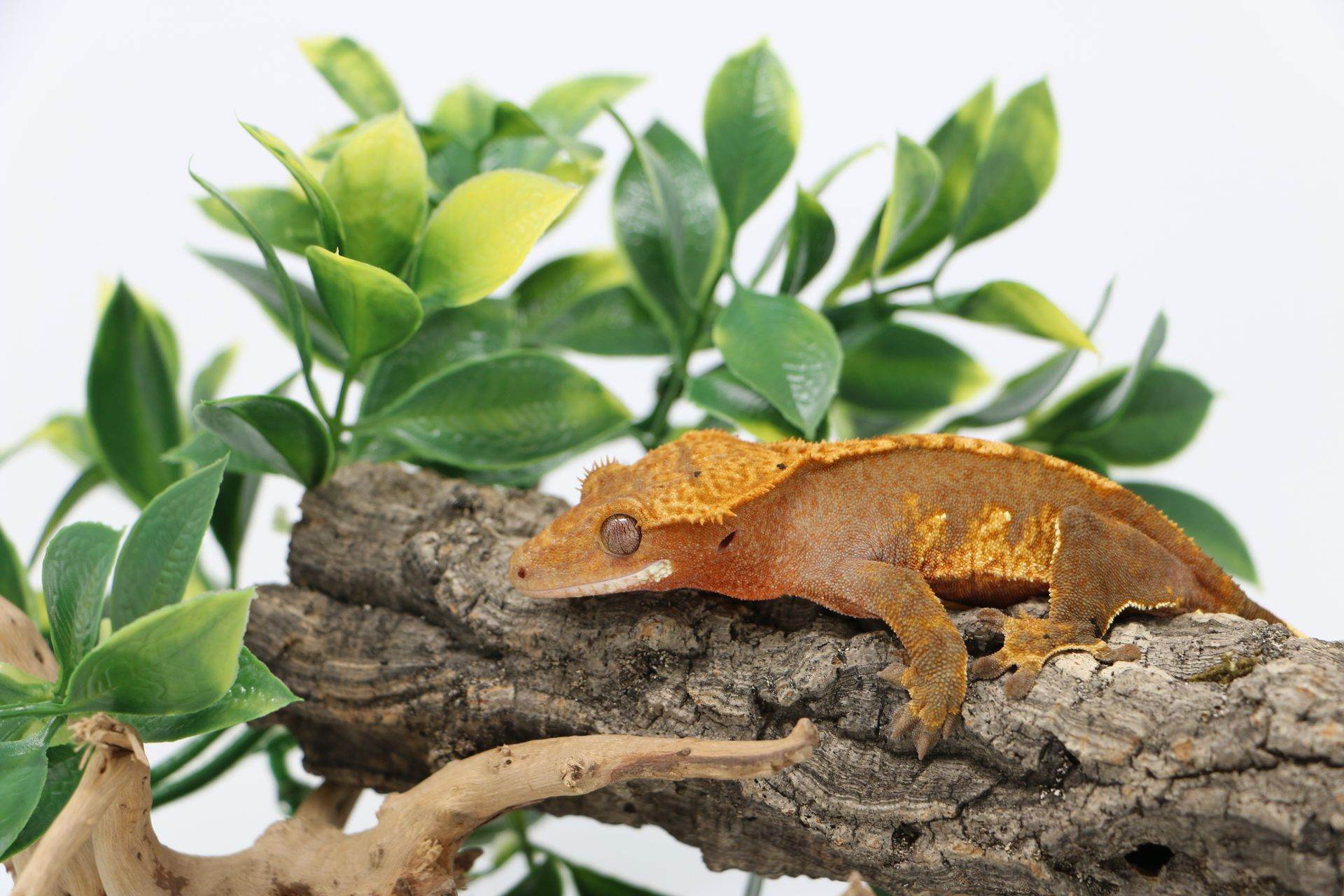
Crested geckos (Correlophus ciliatus) are climbing geckos. The eyelash-like crests above the eyes and the two rows of crests along the back, both visible in the photograph above, are the features the species is named for. Adults reach 8–10 inches including the tail and live 15–20 years in captivity — the same lifespan band as leopard geckos, with entirely different daily needs.
The most common mistake with this species is setting it up like a leopard gecko: a horizontal enclosure, a hot spot, and dry air. Crested geckos need height to climb, cooler temperatures than most keepers expect, and humidity that cycles up and down rather than staying at one level. Get the orientation of the enclosure right — tall, not long — and the rest of the guide follows from it.
What does a crested gecko need, at a glance?
Swipe or scroll across the table to compare values. Use the full source notes with each range.
| Parameter | Range |
|---|---|
| Day temperature | 72–80°F (22–27°C) |
| Night temperature | 65–72°F (18–22°C) |
| Humidity | 50–70%, peaking after misting and falling between mistings |
| Adult length | 8–10 inches including the tail |
| Minimum enclosure (adult) | Vertical 18×18×24 inches to start; 18×18×36 inches recommended |
| Lifespan | 15–20 years |
| Feeding | Powdered diet (CGD) as the staple, offered every other day; live insects once or twice a week as a supplement |
| UVB | Low-intensity UVB (Zone 1) recommended but not compulsory; keeping at room temperature without UVB is also workable |
Sources: ReptiFiles crested gecko guide and Pangea; UVB wording follows Arcadia and ReptiFiles. The full table is on the crested gecko parameter page.
What size enclosure does a crested gecko need?
A vertical enclosure: at least 18×18×24 inches for an adult, with 18×18×36 inches as the recommended upgrade. The numbers read differently from a leopard gecko enclosure on purpose — the third number is the height, and it is the number that matters most. A crested gecko spends its time on branches, leaves, and the enclosure walls, using the full height of the space, and a long, low enclosure wastes the dimension the animal actually uses.
Height alone is not enough. The enclosure needs usable height: branches and foliage at several levels, so the animal can climb, rest, and choose where to spend time, rather than one perch at the top and empty space below. Think in layers — low cover, middle branches, and upper resting spots — and check that the animal can move between them without dropping to the floor.
Juveniles can start in a smaller enclosure and move up as they grow, but the adult enclosure is the size to plan for. An enclosure that is too large for a very small juvenile can make finding food harder; an enclosure that stays too small for an adult removes the climbing space the species is built for. Size the enclosure to the animal in it, and upgrade on schedule.
Photo slot — pending
Vertical enclosure, planted and layered
How should the enclosure be set up?
Build the enclosure around climbing and cover. Sturdy branches at several heights, broad-leaved foliage — live or artificial — for hiding and resting, and a substrate that holds some moisture without staying sodden. The animal should be able to move through the enclosure under cover for most of its route, not cross open space to reach every perch.
Place food and water where the animal can reach them from a branch. Crested geckos feed in elevated dishes, and a dish on the floor of a tall enclosure is easy to overlook and hard for the animal to use comfortably. Keep the feeding spot consistent so the animal learns where food appears, and check it the morning after feeding — an untouched dish and an empty dish tell different stories, and both matter.
Ventilation matters as much as misting. Humidity must be able to fall between mistings, and an enclosure that stays wet all day is not the same as an enclosure held at 50–70%. If condensation never clears and the substrate stays wet, increase airflow and reduce misting before changing anything else.
How hot and how humid should it be?
Day temperatures of 72–80°F (22–27°C) and night temperatures of 65–72°F (18–22°C). That range sits inside normal indoor temperatures in many homes, which is why many keepers need no additional heating at all. The danger with this species is overheating, not cold: temperatures above the day range stress crested geckos quickly, and a heat lamp set up as if for a desert species can push the enclosure past what the animal can tolerate.
Measure temperature where the animal rests, at the top of the enclosure as well as the bottom — warm air rises, and the upper levels where a crested gecko spends its time can be warmer than the floor. If the room itself runs warm, choose the coolest suitable spot in the room for the enclosure before adding any equipment.
Humidity is 50–70%, with a cycle: a peak after misting, then a fall before the next misting. The cycle is the point. Constantly saturated air and constantly dry air are both wrong, even though their averages might both read inside the range. Mist in the evening, when the animal becomes active, and let the enclosure dry back between mistings. A hygrometer placed at mid-height, where the animal rests, tells you more than one placed at the substrate.
What do crested geckos eat?
The staple is a powdered crested gecko diet (CGD) — a prepared fruit-based powder mixed with water — offered every other day. Live insects are a supplement, once or twice a week, not the main diet. That balance is the opposite of the leopard gecko routine, and it is the single most useful distinction between the two species’ feeding guides.
Offer the powdered diet fresh each time, in a shallow elevated dish, and remove the old dish before offering a new one. Prepared diet left in the enclosure dries out and loses appeal, and an animal that stops eating is often an animal that is being offered stale food in the wrong place. Keep a note of whether the dish shows feeding marks — lick marks in the smooth surface — so a change in appetite is noticed in days, not weeks.
Live insects, when offered, should be appropriately sized and gut-loaded. They add variety and hunting behaviour, and they are a useful way to check that the animal is active and feeding well. They do not replace the powdered diet: a crested gecko fed only on insects is missing the balanced nutrition the prepared diet is formulated to provide.
Photo slot — pending
Crested gecko eating powdered diet
Do crested geckos need a heat lamp or UVB?
Most crested geckos at normal room temperature do not need a heat lamp. If the room regularly falls below the night range of 65–72°F (18–22°C), low-level supplementary heating may be needed — but it should be set up to hold the enclosure inside the range, not to create a hot spot of the kind a leopard gecko uses. If in doubt, measure the enclosure for a week before buying heating equipment.
Low-intensity UVB (Zone 1) is recommended but not compulsory, and keeping at room temperature without UVB is also workable. As with leopard geckos, the decision is a package: UVB, diet, and supplementation together. A crested gecko on a complete powdered diet, kept inside the temperature and humidity ranges, is not in the same position as an animal missing one of those pieces.
Watch for the combination that causes harm: a heat lamp added “just in case” in an already warm room, in an enclosure with poor ventilation. That combination raises temperature, dries the air, and removes the cool, humid resting spots the animal uses. When heat is added, it should be controlled, measured, and removable — and the animal should always be able to move away from it.
How do I handle a crested gecko?
Handle gently and close to a surface, letting the gecko walk from hand to hand. Crested geckos can jump, and they do — often without warning and further than expected. Handle over a bed, sofa, or other soft surface, in a closed room, until you know the individual animal’s behaviour. A fall from standing height onto a hard floor is a real injury risk for a small climbing animal.
Never hold a crested gecko by the tail. Like many geckos, crested geckos can drop their tails, and in this species the tail does not regrow — an animal that loses its tail keeps the change for life. Support the body, avoid sudden grabs, and if the animal is moving fast, let it move onto a branch or back into the enclosure rather than tightening your hold.
New animals need a settling period before handling becomes routine. Let the gecko eat from its dish on schedule and use the enclosure’s cover confidently first. Short, calm sessions build trust faster than long sessions that end with the animal trying to escape, and handling in the evening — when the animal is naturally active — is usually easier than handling during the day, when it would rather rest.
How do I know if something is wrong?
This section covers recognition and prevention only. It does not diagnose or treat. If a crested gecko stops eating, loses weight, or shows any of the signs below, see a qualified exotics veterinarian.
Check temperature and humidity first. An enclosure running above 80°F (27°C), or humidity stuck at one extreme, will change appetite and behaviour before any illness does. Check that the powdered diet is fresh, in the right place, and showing feeding marks. Then check the animal itself: weight, tail thickness, skin condition, and shedding.
Signs worth a prompt veterinary visit include continued weight loss, a tail that is visibly thinning, repeated difficulty shedding — especially shed retained on toes or around the tail tip — lethargy that does not lift once temperature and humidity are corrected, and any injury, swelling, or discharge. Shed retained on toes can restrict blood flow if left, so it is worth checking toes and tail tip after every shed, gently, and seeking help rather than pulling shed off by force.
Keep the same simple record as for any reptile: feeding dates, shed dates, and weight where possible. With crested geckos, add a note of whether the dish showed feeding marks. A record turns a vague “it hasn’t eaten much lately” into a date the problem started, which is what a veterinarian needs to work with.
Veterinary disclaimer. This guide helps owners recognise problems early and know when an animal needs a vet. It is not veterinary advice, and it contains no treatment plans or medication doses. If your crested gecko is sick, see a qualified exotics veterinarian. Read the full Veterinary Disclaimer.
How can I tell whether a planted enclosure is usable?
A vertical enclosure should offer places to rest and routes to move between them. Look beyond the amount of greenery visible from outside. Leaves can make an enclosure look full while providing little support, and a decorative branch may leave the animal exposed when it reaches the feeding ledge. Check that foliage, perches and sheltered resting places are arranged around how the gecko climbs rather than around a photograph of an empty habitat.
Secure branches and ledges so they do not shift when the animal lands. Avoid narrow gaps where a gecko could become trapped and check that access to the enclosure does not catch feet or the tail. Plants should be identified and appropriate for the environment before they are added. Do not assume that an attractive houseplant, potting product or decorative coating is suitable for a reptile enclosure merely because it is sold for indoor use.
Leave yourself access to inspect the interior. Dense planting is useful cover, but it should not make it impossible to check for leftover diet, mould or a loose fixture. A practical enclosure allows care without forcing the animal out of its refuge each time. Keep the background of the habitat stable enough that the gecko can learn where food, water and shelter are found.
How should I distinguish misting from constant wetness?
Misting is an action; humidity is the condition that results. They are not interchangeable observations. Assess the enclosure after spraying and again as it dries, including the resting places used by the animal. If surfaces remain persistently wet, investigate ventilation, substrate condition and the amount of water being added. Spraying again because a calendar says so can conceal a drying problem instead of correcting it.
The parameter range is a reference for a cycle, not a reason to seal the enclosure shut. Air movement and drying matter alongside moisture. The gecko still needs drinking water and suitable places to rest; a wet wall is not proof that every part of the enclosure is suitable. Note where the hygrometer sits and whether a different position would represent the animal’s environment more accurately.
When room conditions change, revisit the result of the routine. Heating in a home, a warm spell or a new enclosure position can alter how quickly water evaporates. Record what changed before adjusting the care routine. Avoid making the enclosure hotter merely to dry it faster, because moisture management should not remove the animal’s ability to remain within an appropriate temperature range.
What should I check when a gecko seems to refuse food?
Begin with what can be observed without forcing a feeding response. Check whether the diet was mixed according to its instructions, whether it was offered where the animal can reach it, and whether dried food or tiny feeding marks could explain why intake is difficult to judge. Keep the same basic feeding location while investigating. Moving the bowl repeatedly can make it harder to tell whether the animal has located its food.
A powdered complete diet is different from plain fruit puree or a treat. Read the product label rather than relying on the appearance of the food. Keep preparation equipment clean and do not use a generic recipe to replace the directions for the product you actually have. Insects are supplemental in this guide, offered once or twice a week; changing insect frequency should not quietly replace the complete-diet routine.
Do not respond to every uncertain meal by handling the animal, opening its mouth or attempting assisted feeding. Persistent refusal, weight loss, weakness or other concerning changes require a qualified exotics veterinarian. Provide the feeding record and environment observations. The purpose of checking the setup is to supply useful information and correct obvious husbandry faults, not to prove that veterinary help is unnecessary.
How can care be consistent without making it rigid?
Keep a record of food offered, water changes, enclosure observations and the animal’s usual resting behaviour. Note changes to heating, lighting, foliage or enclosure location. A routine that is understandable to another caregiver is more useful than an elaborate system that only its designer can operate. Keep product instructions available alongside the record, especially when supplements or prepared diets are involved.
Consistency does not mean ignoring the animal. A gecko that repeatedly avoids an exposed path may need better cover, while a persistent change in posture or movement deserves closer attention. Observe before adding more equipment. Extra lamps, misting systems and decorative features introduce additional things to check; none removes the need to understand the basic environment and the individual animal’s condition.
Prepare for the tasks that do not happen in a normal feeding visit. Show a caregiver how doors latch, where equipment is controlled and how to prevent an escape while cleaning. Keep enclosure tools separate from kitchen equipment and wash hands after contact with the animal or its environment. Arrange a veterinary contact and explain what should prompt a call. These ordinary preparations make the habitat easier to maintain without presenting the animal as a maintenance-free pet.
How should I use the parameter page alongside this guide?
Use the parameter page to check the figures and this guide to understand the decisions around them. The table cannot tell you whether a particular branch is secure, whether a feeding ledge is accessible or whether the enclosure dries appropriately after misting. Those observations have to come from the actual habitat. Keep the measurement location and the animal’s stage of life in mind when interpreting a range.
Sources can describe different equipment, conditions or care assumptions. A number copied without that context may appear more certain than the evidence supports. This site keeps a working parameter library and labels unresolved review points instead of quietly blending conflicting advice. If the table and another source disagree, record the discrepancy and seek advice appropriate to the animal; do not combine the most convenient parts into an untested routine. Corrections can be sent through the Contact page with the source and the relevant passage.
How should a new enclosure be introduced?
Check the completed habitat before moving the gecko. Confirm that the door closes securely, resting branches do not shift and feeding equipment is accessible. Plan a transfer that limits handling and leaves a sheltered resting place available as soon as the animal enters. Changing homes can alter what you observe, so record the change and compare behaviour with the animal’s established pattern rather than expecting an immediate display of confidence.
Keep observations quiet and purposeful. You do not need to see the gecko use every perch to know that the enclosure should provide choices. Avoid repeatedly moving it to the place you think it should prefer. If an essential feature is inaccessible, correct that problem, but allow the animal to choose where to rest. Keep the existing diet and care information available to a caregiver so the move does not accidentally change feeding, supplements and handling at the same time.
Frequently asked questions
Do crested geckos need a heat lamp?
Usually not. At normal room temperatures of 72–80°F (22–27°C) by day, no extra heat is needed. Add heating only if the room regularly falls below the night range, and control and measure it.
What size enclosure does a crested gecko need?
A vertical enclosure of at least 18×18×24 inches for an adult, with 18×18×36 inches recommended. Height, with branches and foliage at several levels, matters more than floor space.
Do crested geckos need UVB?
Low-intensity UVB (Zone 1) is recommended but not compulsory. Keeping at room temperature without UVB is also workable when the diet is complete and the other parameters are in range.
What do crested geckos eat?
A powdered diet (CGD) as the staple, offered every other day, with live insects once or twice a week as a supplement. Offer the diet fresh, in an elevated dish.
How long do crested geckos live?
15–20 years in captivity. The enclosure, temperature, and feeding routine in this guide are built for that lifespan.
Why is my crested gecko not eating?
Check that the enclosure is inside the temperature and humidity ranges, that the diet is fresh and in an elevated dish, and that the animal is settled. If the dish stays untouched and weight is falling, see a qualified exotics veterinarian.
Can crested geckos lose their tails?
Yes, and unlike some geckos, the tail does not regrow. Never hold a crested gecko by the tail, and handle over a soft surface in case of jumps.
Keep reading
- Crested gecko care parameters — the full table behind this guide
- Leopard gecko care guide — the ground-dwelling alternative, with a hot spot and drier air
- Pet tortoise care guide — a much longer commitment, chosen species by species
- About Scaled School — how the numbers in this guide were checked